QatarEnergy has declared force majeure for several of its customers after suspending liquefied natural gas (LNG) production following reported military attacks on key energy facilities in Qatar. The announcement has triggered major concerns in global energy markets and caused a sharp rise in gas prices worldwide.
LNG Production Halted After Attacks
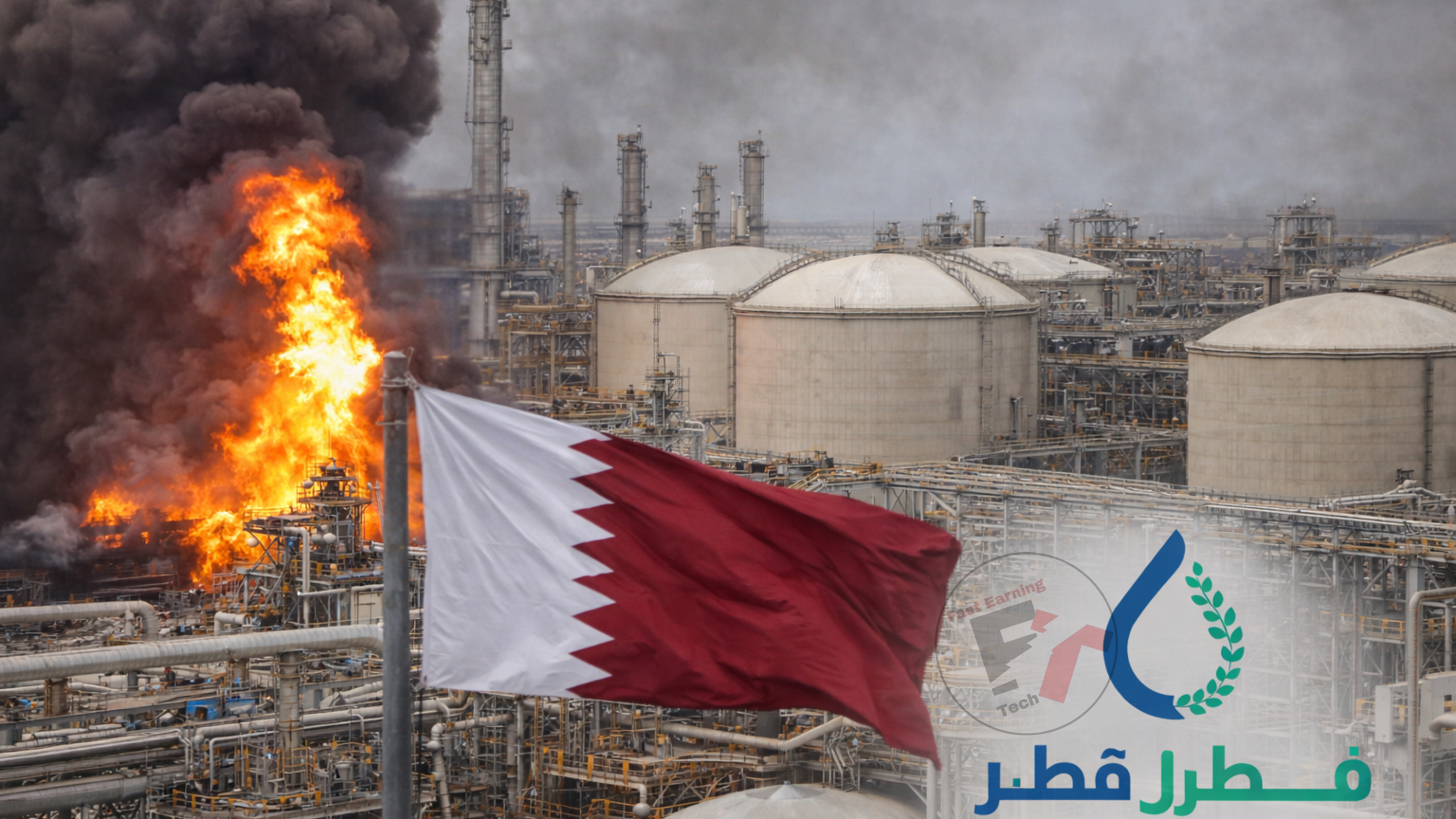
In an official statement released on Monday, QatarEnergy confirmed that it had stopped production of LNG and related products at some of its major facilities. The decision came after military attacks reportedly targeted operational sites in Ras Laffan Industrial City and Mesaieed Industrial City, two of the country’s most important energy hubs.
According to the company, the attacks forced the shutdown of several processing units to ensure safety and prevent further damage to critical infrastructure.
Qatar is one of the world’s largest exporters of liquefied natural gas, supplying energy to many countries in Asia, Europe, and other regions. Any disruption to its production has the potential to significantly affect global energy supply.
What “Force Majeure” Means
By declaring force majeure, QatarEnergy has formally informed its buyers that it may not be able to fulfill certain contractual delivery obligations due to circumstances beyond its control.
Force majeure is a legal term often used in international contracts when unexpected events such as natural disasters, war, or major accidents prevent a company from meeting its commitments.
This move allows the company to temporarily suspend deliveries without facing penalties under existing supply agreements.
Global Gas Prices Surge
Following the announcement, global gas markets reacted immediately.
Benchmark wholesale gas prices in Europe, including Dutch and British markets, reportedly surged by nearly 50 percent within hours of the news.
At the same time, benchmark LNG prices in Asia jumped by approximately 39 percent, reflecting concerns about potential supply shortages in global markets.
Energy traders and analysts say the sudden spike highlights how sensitive global energy markets are to geopolitical tensions in the Middle East.
Importance of Qatar in Global Energy Supply
Qatar plays a critical role in the global LNG market. The country exports massive volumes of natural gas every year, helping meet energy demands in countries such as Japan, South Korea, China, India, and several European nations.
Many countries rely heavily on Qatari LNG shipments to support electricity generation, heating systems, and industrial production.
Any prolonged disruption in Qatar’s LNG production could tighten global supply and put additional pressure on energy prices.
Concerns Over Regional Stability
The halt in production has also raised broader concerns about the stability of energy infrastructure across the Middle East.
Energy facilities in the region are often considered strategic assets, and attacks on such installations can have far-reaching economic consequences.
Experts warn that if tensions continue to escalate, the impact could extend beyond gas markets and affect global trade, energy security, and economic stability.
What Happens Next
QatarEnergy has not yet provided a clear timeline for when LNG production might resume. The company is reportedly assessing damage to its facilities and evaluating safety conditions before restarting operations.
Meanwhile, governments and energy companies around the world are closely monitoring the situation as they prepare for possible supply disruptions.
The coming days will be crucial in determining how quickly production can return to normal and whether global energy markets will stabilize.