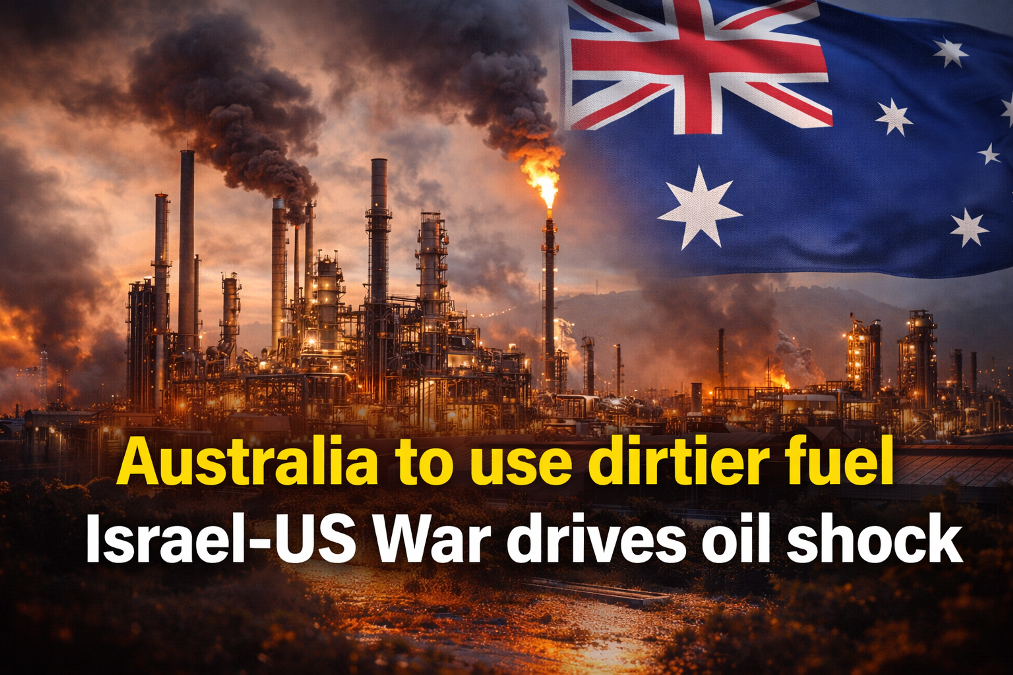
Australia has announced an emergency move to temporarily relax its fuel quality standards as the ongoing conflict involving the United States, Israel, and Iran continues to disrupt global oil supplies and push fuel prices higher worldwide. The decision comes amid growing concerns that the escalating conflict in the Middle East could create significant shortages in energy markets and increase pressure on countries that depend heavily on imported fuel.
Energy Minister Chris Bowen confirmed that the Australian government will introduce a temporary 60-day measure allowing fuel with higher sulphur content to be sold in the domestic market. Officials believe the policy will help stabilize supply and reduce the risk of fuel shortages as the war-driven oil shock continues to ripple through global markets.
War in the Middle East Shakes Global Energy Markets
The conflict between the United States, Israel, and Iran has already had a significant impact on global oil markets. Military strikes, missile exchanges, and attacks on energy infrastructure across the Middle East have raised fears about disruptions to oil production and transportation routes.
The Middle East is home to some of the world’s largest oil reserves, and the region plays a crucial role in supplying energy to global markets. Any conflict affecting the region can lead to dramatic fluctuations in oil prices. Analysts say the war has increased risks to oil shipping routes and production facilities, which in turn has triggered uncertainty in global energy markets.
Oil prices have surged in recent weeks as traders react to the possibility of reduced supply. The situation has become even more concerning due to the strategic importance of the Strait of Hormuz, one of the world’s most critical oil transit chokepoints. A large portion of global oil shipments passes through this narrow waterway, making it extremely vulnerable during regional conflicts.
Experts warn that if the conflict intensifies or shipping routes become unsafe, the global oil supply chain could face severe disruptions.
Australia Responds with Emergency Fuel Policy
In response to these developments, the Australian government has decided to temporarily relax fuel quality regulations to ensure a stable supply of petrol and diesel across the country.
Under the new measure, fuel suppliers will be permitted to sell fuel with higher sulphur levels than normally allowed. While Australia typically enforces strict environmental standards for fuel quality, officials say this temporary adjustment will help bring additional fuel into the domestic market during a period of global supply uncertainty.
Energy Minister Chris Bowen stated that the move could allow an extra 100 million litres of fuel to enter the Australian market each month. This additional supply could play a crucial role in easing pressure on the country’s fuel reserves and preventing shortages that could affect transportation, logistics, and essential industries.
Bowen emphasized that the policy is temporary and designed only as a short-term solution while global markets stabilize.
“This measure is about ensuring fuel security for Australians during a period of extraordinary global uncertainty,” Bowen said. “We are taking practical steps to protect supply while the international situation continues to evolve.”
Potential Cooperation with International Energy Agency
The Australian government is also exploring broader international measures to address the energy crisis. Officials confirmed that Canberra is in discussions with the International Energy Agency (IEA) regarding the possibility of a coordinated oil release from strategic reserves.
The IEA, which represents major energy-consuming countries, has previously organized coordinated releases of emergency oil reserves during global crises. Such actions are designed to stabilize markets and prevent sudden price spikes.
However, Bowen clarified that any oil Australia contributes to a coordinated release would remain within the country’s domestic market rather than being exported internationally. This approach is intended to ensure that Australian consumers and industries benefit directly from the additional supply.
Government officials say discussions are ongoing and will depend on how the conflict develops and how global oil markets respond.
Rising Fuel Prices Create Pressure on Economies
The global surge in oil prices is already beginning to affect economies around the world. Higher fuel costs increase transportation expenses, raise production costs for businesses, and ultimately lead to higher prices for goods and services.
For Australia, which imports a significant portion of its refined fuel, rising oil prices pose a serious economic challenge. Increased fuel costs can impact everything from freight transportation and agriculture to airline operations and everyday commuting.
Economists warn that sustained high energy prices could contribute to inflationary pressures and slow economic growth. Governments in many countries are now considering emergency measures to protect consumers and businesses from the impact of rising fuel costs.
Australia’s decision to relax fuel standards reflects the urgency of the situation and the need to maintain stable energy supplies.
Environmental Concerns Over Higher Sulphur Fuel
While the emergency fuel policy aims to address supply concerns, environmental experts have raised questions about the potential impact of allowing higher sulphur fuel into the market.
Sulphur in fuel contributes to air pollution and can harm both human health and the environment. For this reason, many countries have gradually tightened fuel quality standards in recent decades to reduce emissions and improve air quality.
However, Australian officials insist that the measure is strictly temporary and will remain in place only for a limited period.
The government says environmental considerations remain important but must be balanced with the urgent need to maintain fuel availability during a global crisis.
Officials also noted that the relaxation of standards will be closely monitored and reviewed regularly.
Global Energy Security in Focus
The ongoing conflict in the Middle East has once again highlighted the vulnerability of global energy systems. Many countries depend on a relatively small number of regions for oil and gas supplies, making them susceptible to geopolitical tensions and disruptions.
Energy security has become a growing priority for governments around the world, with increasing focus on diversifying energy sources, strengthening strategic reserves, and accelerating the transition toward renewable energy.
Australia has been investing heavily in renewable energy projects, including solar, wind, and hydrogen initiatives. However, fossil fuels remain a crucial part of the country’s energy mix, particularly for transportation and heavy industry.
The current oil shock demonstrates that even as countries move toward cleaner energy sources, global oil markets continue to play a critical role in economic stability.
Uncertain Outlook for Oil Markets
Energy analysts say the future of oil prices will depend largely on how the conflict between Iran, Israel, and the United States develops in the coming weeks.
If tensions escalate further or attacks target major oil infrastructure in the Middle East, the global oil market could face even greater volatility. On the other hand, diplomatic efforts or ceasefire negotiations could help calm markets and stabilize prices.
For now, governments across the world are preparing for multiple scenarios, including potential shortages, price spikes, and supply disruptions.
Australia’s decision to temporarily lower fuel quality standards represents one of several emergency measures aimed at safeguarding national energy security during a period of unprecedented geopolitical tension.
As the conflict continues to reshape global energy dynamics, policymakers will likely remain on high alert, ready to take further action if necessary to protect fuel supplies and economic stability.