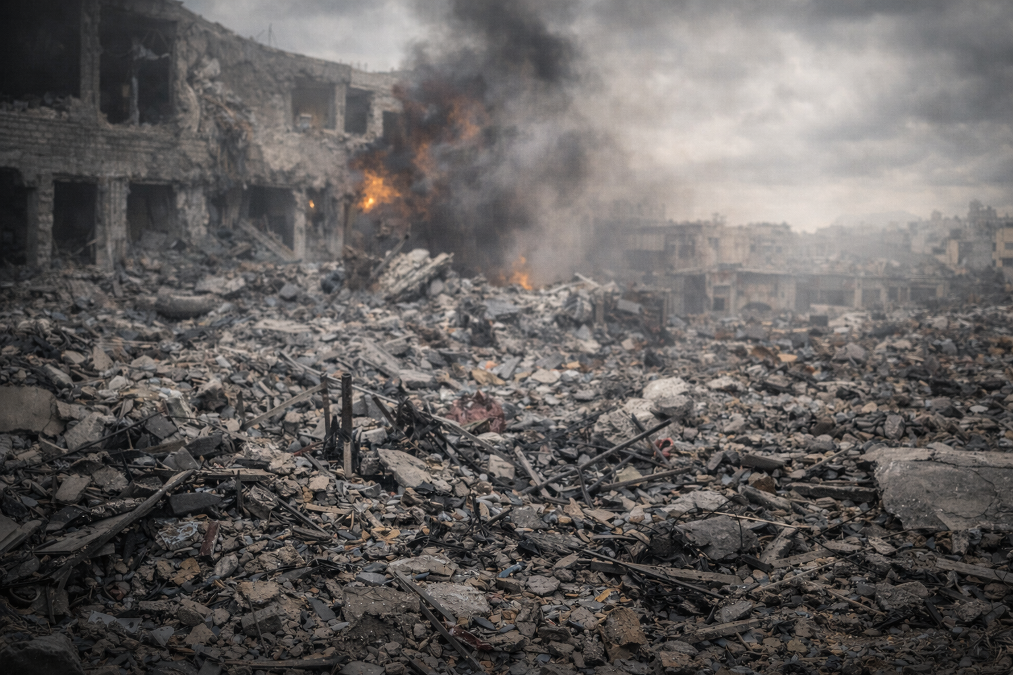
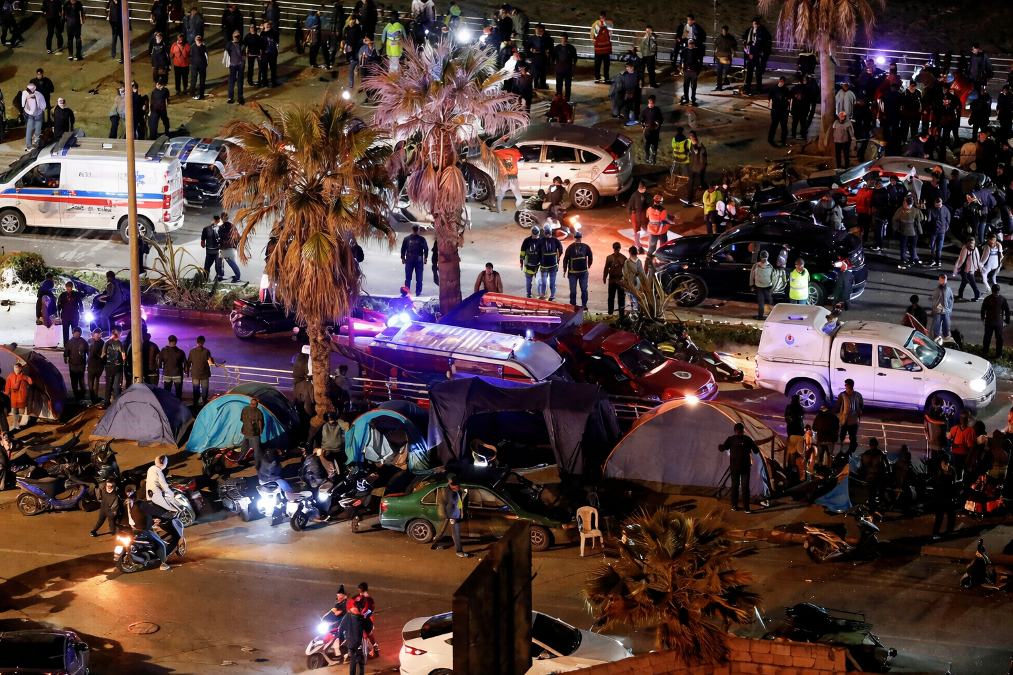
A devastating Israeli air strike on Beirut’s seafront has killed at least eight people and wounded dozens more, according to Lebanese health officials. The attack, described by witnesses and authorities as a “double-tap strike,” targeted an area where displaced families had gathered while fleeing continuous bombardment in other parts of the city.
The strike occurred in the Ramlet al-Baida coastal area of Beirut, a location that had become a temporary refuge for many civilians escaping heavy air strikes across Lebanon. The attack is part of Israel’s ongoing large-scale military operations in Lebanon as tensions continue to escalate in the wider regional war involving Iran, Israel, Hezbollah, and the United States.
Officials from Lebanon’s Ministry of Public Health confirmed that eight people were killed and at least 31 others were injured in the attack. Emergency teams rushed to the scene following the explosion, transporting wounded civilians to nearby hospitals as rescue workers searched for survivors under debris.
What Is a “Double-Tap Strike”?
According to local authorities and eyewitness accounts, the attack involved what is commonly referred to as a “double-tap strike.” This tactic involves an initial missile strike followed by a second strike moments later, often targeting the same location after first responders or civilians gather to assist the wounded.
Human rights organizations have frequently criticized the use of such tactics in urban conflict zones because they increase the risk of casualties among rescuers and civilians. Witnesses at the Beirut seafront described hearing a loud explosion followed by another blast minutes later.
Many of the victims were reportedly civilians who had fled their homes earlier due to intense Israeli bombardment in southern Lebanon and parts of Beirut.
Beirut Under Continued Bombardment
The strike is the latest in a series of large-scale Israeli attacks targeting locations across Lebanon. Over the past several days, Israeli air strikes have hit areas in Beirut, southern Lebanon, and regions near the Israeli-Lebanese border.
Israeli officials say the attacks are aimed at weakening Hezbollah’s military capabilities, accusing the Iran-backed group of launching repeated missile attacks against Israeli territory.
However, Lebanese authorities and humanitarian organizations say the strikes are increasingly affecting civilian areas, including residential neighborhoods, roads, and infrastructure.
Residents of Beirut described scenes of panic and chaos as the explosions shook the coastal district. Many families had gathered along the seafront in an attempt to escape the heavy bombardment in the city.
Displaced Families Seeking Safety
The Ramlet al-Baida seafront had become a temporary refuge for displaced residents as the conflict intensified. With thousands of people fleeing their homes across southern Lebanon and parts of Beirut, many families were seeking safer areas away from frequent air strikes.
Witnesses said that tents and makeshift shelters had been set up along parts of the coast where families gathered during the day. Some people were resting near the beach while others were waiting for transportation to move to safer regions.
One survivor described the moment of the attack as sudden and terrifying.
“We thought the seafront would be safer than the neighborhoods that were being bombed,” the witness said. “But suddenly there was a huge explosion, and then another one. People started screaming and running in every direction.”
Emergency workers reported that many of the injured were civilians, including women and elderly people.
Hezbollah and Iran Launch Attacks on Israel
At the same time as the Beirut strike, Hezbollah and Iranian forces launched coordinated waves of attacks against Israeli positions. According to Israeli defense officials, several missiles and drones were fired toward northern Israel and other military targets.
Israel’s military said its air defense systems intercepted many of the incoming projectiles, though some strikes reportedly landed in open areas.
Hezbollah has said its attacks are part of its support for Iran as the broader regional conflict continues to escalate. The militant group has been exchanging fire with Israeli forces almost daily since the start of the war.
Military analysts warn that the continued exchange of attacks between Israel and Hezbollah could quickly escalate into a full-scale war between the two sides.
Wider War Across the Region
The conflict in Lebanon is closely connected to the broader war involving Israel, Iran, and the United States. Over the past several weeks, the region has seen multiple military operations, missile exchanges, and attacks on strategic infrastructure.
Iran has launched retaliatory missile and drone attacks targeting Israel and several Gulf countries, while Israel and US forces have conducted air strikes against Iranian targets and Iran-backed groups across the region.
The ongoing fighting has raised fears of a wider regional war, with several countries already involved either directly or indirectly.
Diplomatic efforts to de-escalate the conflict have so far shown little progress.
Humanitarian Concerns Growing
Humanitarian organizations have expressed growing concern about the impact of the conflict on civilians. The latest strike in Beirut highlights the risks faced by displaced families seeking safety from the violence.
Hospitals in Beirut have reportedly been overwhelmed with injured civilians as the number of casualties continues to rise. Medical staff are struggling to cope with the influx of patients, while shortages of medical supplies are becoming increasingly severe.
Aid organizations have called for greater protection for civilians and urgent humanitarian assistance for those affected by the conflict.
International Reactions
The attack has drawn reactions from international observers who are closely monitoring the escalating conflict. Several governments and human rights groups have urged restraint and called for immediate efforts to protect civilian populations.
However, both Israel and Hezbollah appear determined to continue military operations as the conflict intensifies.
Experts warn that without diplomatic intervention, the situation could deteriorate further and lead to even greater destruction across Lebanon and the region.
Fear and Uncertainty in Beirut
For many residents of Beirut, the latest attack has deepened fears about the future. The city, which has already experienced years of economic crisis and political instability, is now facing the devastating consequences of war.
Families are scrambling to find safer places to stay, while others are considering leaving the country altogether if the fighting continues.
The strike on the Beirut seafront serves as a grim reminder that civilians remain at the center of the conflict, often bearing the heaviest burden of the violence.
As the war expands across multiple fronts, the humanitarian and geopolitical consequences continue to grow, leaving the region facing an uncertain and dangerous future.