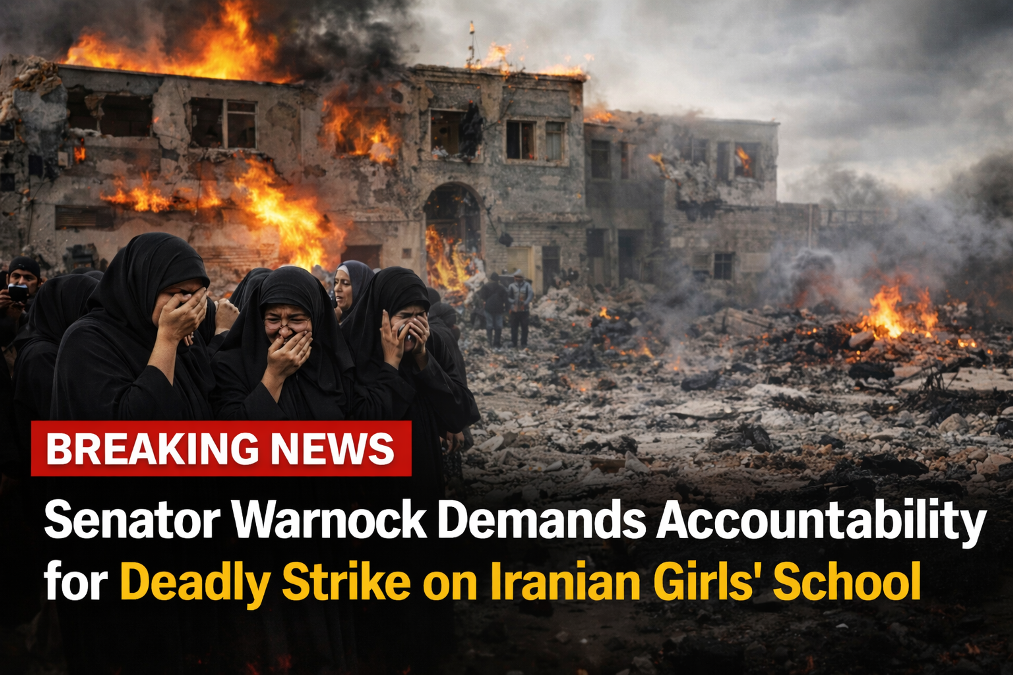
US Senator Raphael Warnock, a member of the Democratic Party and a pastor, said the deaths of the schoolchildren should “shock our conscience and cause us to recoil in horror.” His remarks come amid growing pressure on the US government to provide answers about the circumstances surrounding the strike.
The attack reportedly took place in the Iranian city of Minab, where a missile strike hit an elementary school building during the ongoing military escalation in the region. Iranian authorities have blamed the tragedy on joint US–Israeli military operations, though investigations into the incident are still ongoing.
Growing Calls for Investigation
The devastating loss of young lives has intensified calls within the United States and internationally for a thorough investigation into the incident. Senator Warnock emphasized that the killing of children in any conflict should never be ignored or minimized.
In a post shared on social media, Warnock expressed deep concern over the tragedy, saying that a nation whose leaders dismiss or overlook the deaths of children is in urgent need of moral reflection and accountability.
He also highlighted the universal value of human life, stressing that children everywhere deserve protection regardless of nationality or political circumstances.
“We must never forget that Iranian children, too, are children of God,” Warnock wrote.
His statement reflects growing unease among lawmakers about the humanitarian consequences of the ongoing military campaign.
Democratic Senators Demand Answers
Warnock is among a group of 40 Democratic senators who have formally requested answers from the US Department of Defense regarding civilian casualties in Iran. The lawmakers sent a letter asking the Trump administration to provide details about recent military operations and their potential role in the school strike.
The senators are seeking clarification on several key issues, including whether US forces were directly involved in the attack, what intelligence information was used to authorize the strike, and what measures were taken to prevent civilian casualties.
They have also requested information on the broader humanitarian impact of the conflict, including civilian deaths, damage to infrastructure, and displacement of populations in affected areas.
The lawmakers stressed that transparency is essential in maintaining public trust and ensuring that military operations comply with international humanitarian law.
The Strike on Minab
According to Iranian officials, the attack targeted a school in Minab, a city located in southern Iran. Authorities say the missile strike hit the building during school hours, causing catastrophic damage and killing a large number of students.
Initial reports from Iran’s health ministry indicated that more than 170 schoolgirls were killed, making it one of the deadliest incidents involving civilians since the start of the conflict.
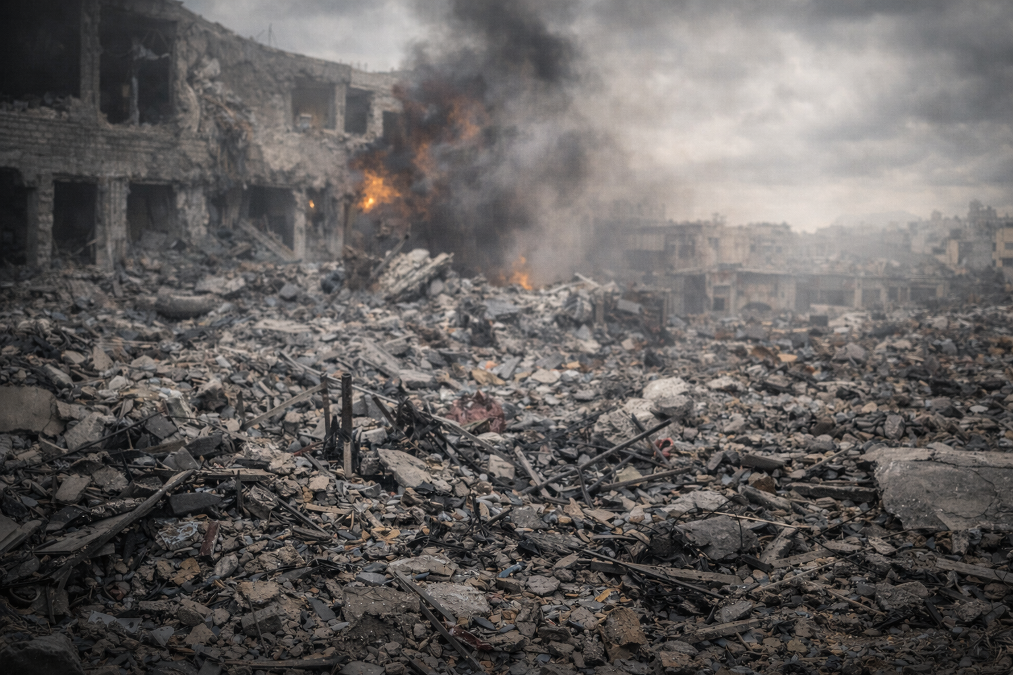
Rescue teams reportedly worked for hours to recover victims and search for survivors among the rubble. Images and videos circulating online showed destroyed classrooms, damaged school buildings, and emergency workers responding to the scene.
Iranian officials described the attack as a war crime and demanded international condemnation.
US Government Response
The US government has not yet provided a full explanation regarding the incident. Officials have said that an internal military review is underway to determine the facts surrounding the strike.
Defense officials indicated that they are examining operational data, targeting procedures, and intelligence reports to understand how the attack occurred.
The Pentagon has stated that protecting civilians is a priority in military operations and that investigations will determine whether mistakes were made.
However, critics argue that more transparency is needed, particularly when incidents involving civilian casualties occur.
International Reaction
The strike has sparked strong reactions around the world, with many international observers calling for an independent investigation.
Human rights organizations have emphasized the importance of accountability when civilian lives are lost in armed conflicts. Several groups have urged both sides in the conflict to respect international humanitarian law and take greater precautions to protect civilians.
The tragedy has also reignited debate about the broader consequences of the war involving the United States, Israel, and Iran. As military operations continue across multiple fronts, the risk of civilian casualties remains a major concern.
Humanitarian Impact of the Conflict
The war between Iran, Israel, and the United States has already caused significant destruction and loss of life across the region. Military strikes, missile attacks, and drone operations have targeted infrastructure, military facilities, and strategic sites.
However, civilians have increasingly been caught in the crossfire.
Humanitarian organizations warn that the conflict is placing enormous strain on communities, hospitals, and emergency services. In many areas, families are struggling to access basic necessities, including medical care, electricity, and clean water.
The attack on the Minab school highlights the devastating impact that armed conflict can have on children and vulnerable populations.
Debate Over Military Strategy
The tragedy has also sparked debate within the United States about the broader military strategy in the conflict. Some lawmakers have questioned whether current operations are increasing the risk of civilian casualties and destabilizing the region further.
Others argue that the US must continue to counter perceived threats from Iran and its allies.
Senator Warnock’s comments reflect the concerns of those who believe that moral accountability must remain central to foreign policy decisions.
He urged US leaders to reflect on the human cost of war and ensure that lessons are learned from tragic events like the Minab school strike.
Looking Ahead
As investigations continue, many questions remain unanswered about what happened during the attack on the Iranian girls’ school. Lawmakers, human rights advocates, and international observers are closely watching the situation and waiting for the results of the Pentagon’s review.
For the families who lost children in the strike, the demand for justice and accountability remains urgent.
The tragedy serves as a painful reminder that in times of war, the consequences often fall most heavily on those least able to defend themselves — innocent civilians and children.
Whether the incident leads to policy changes or renewed diplomatic efforts remains uncertain. However, it has already intensified the global conversation about the ethical and humanitarian responsibilities of nations engaged in armed conflict.