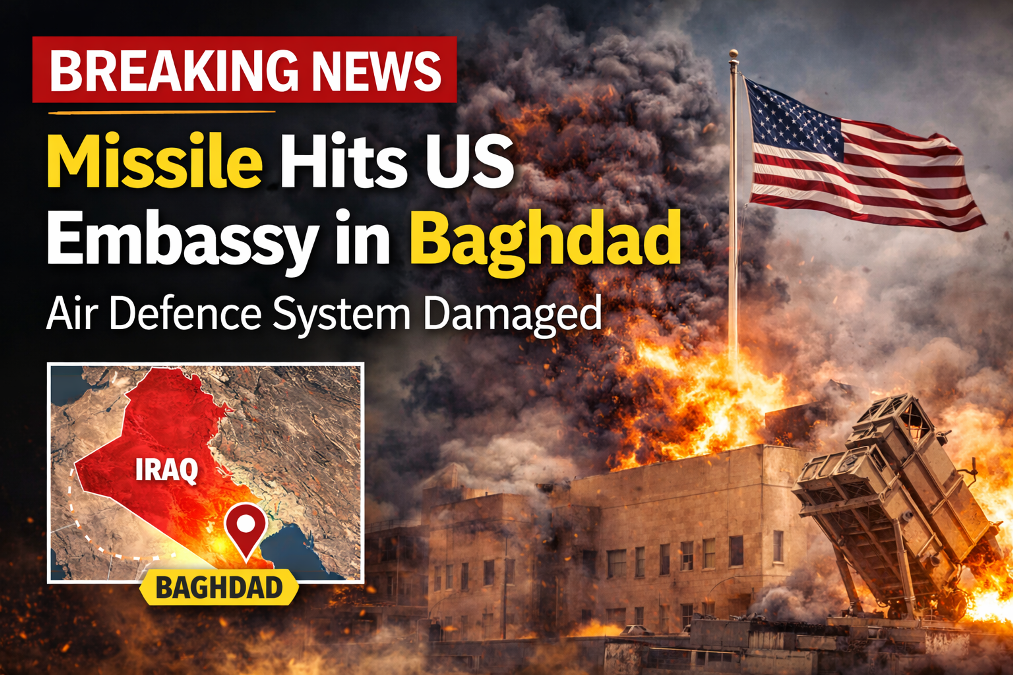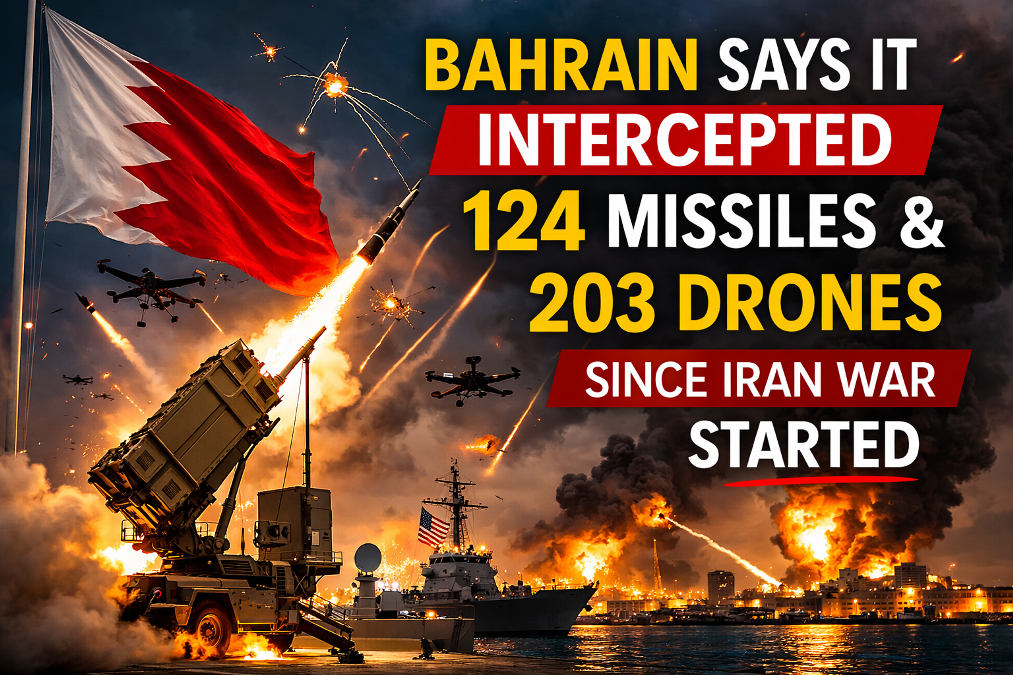
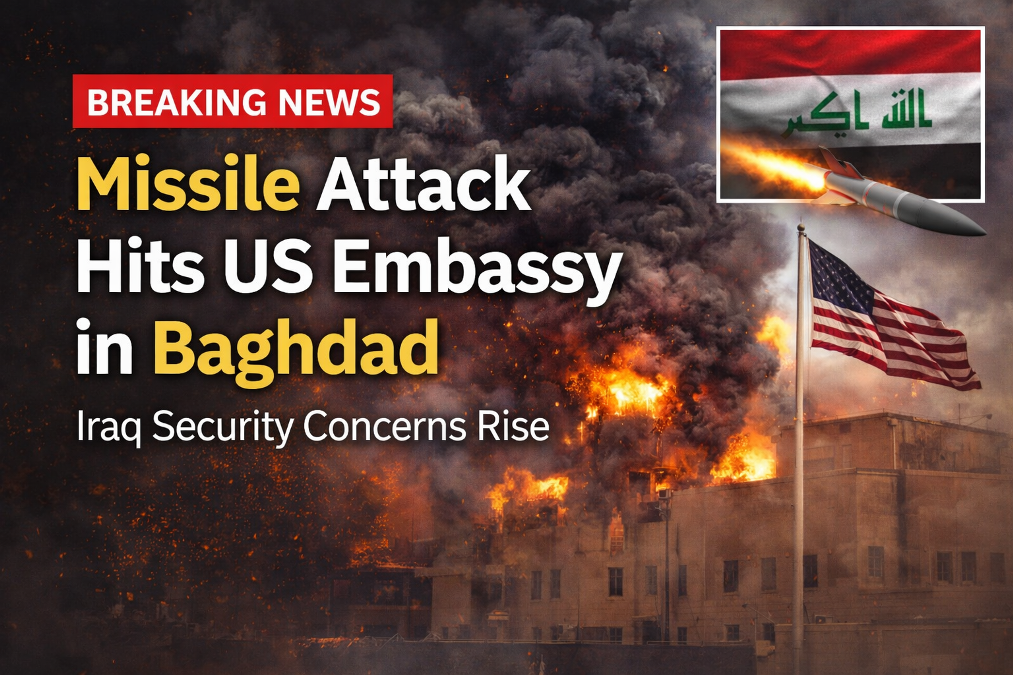
Security concerns in Iraq have intensified after a missile strike reportedly targeted a unit linked to the C-RAM air defence system at the United States embassy compound in Baghdad. The incident has once again highlighted the fragile security situation in Iraq as tensions across the Middle East continue to rise amid the escalating conflict involving the United States, Israel and Iran.
According to early reports, the missile attack struck a component of the defensive system located inside the heavily fortified diplomatic zone in Baghdad. The Counter-Rocket, Artillery and Mortar (C-RAM) system is designed to intercept incoming rockets and missiles and is a critical part of the security infrastructure protecting the US embassy compound.
So far, no group has officially claimed responsibility for the attack. However, security analysts believe that the strike is likely connected to the growing campaign of attacks carried out by Iran-aligned armed groups operating in Iraq.
Rising Attacks on US Interests in Iraq
Over the past several weeks, Iran-linked militia groups have increased their attacks on US interests across Iraq. These groups operate under the umbrella organization known as the Islamic Resistance in Iraq, a coalition of several militia factions that maintain close ties with Iran.
Since the beginning of Iran’s ongoing military confrontation with the United States and Israel, these groups have reportedly launched dozens of attacks targeting US military bases, diplomatic facilities, and logistical convoys throughout Iraq.
The recent missile strike on the US embassy compound appears to be part of this broader campaign aimed at pressuring American forces in the region.
Retaliation Linked to Regional Conflict
The escalation in attacks comes amid growing anger among Iran-aligned groups following the death of Iran’s former supreme leader Ali Khamenei, who many militia organizations across the region have long considered a symbolic leader and ideological guide.
Militia factions have publicly vowed to retaliate against US and Israeli interests for his death. Many of these groups have pledged allegiance to the Iranian leadership and view the ongoing conflict as a broader struggle against Western influence in the Middle East.
According to regional security observers, the situation has created a highly volatile environment in Iraq where multiple armed factions are competing for influence and responding to events occurring far beyond the country’s borders.
$100,000 Bounty Announcement
Adding to the tension, the Islamic Resistance in Iraq recently issued a controversial statement offering a $100,000 reward to anyone who provides information that could lead to the capture or targeting of US military or intelligence personnel operating in the region.
The announcement has raised serious concerns among international observers and Iraqi authorities, as it could potentially encourage attacks on foreign personnel and further destabilize Iraq’s already fragile security situation.
Experts warn that such calls for violence could significantly increase the risk of attacks against diplomatic missions, military installations, and civilian contractors working with international organizations.
Wave of Drone and Missile Attacks
The missile strike on the US embassy compound did not occur in isolation. In recent days, Iraq has witnessed a series of drone strikes, missile launches, and retaliatory attacks involving multiple armed factions operating across the country.
Iran-aligned militias have targeted several US facilities and strategic locations believed to host American forces. Some attacks have also been directed at Iranian Kurdish opposition groups located in northern Iraq, which Tehran accuses of supporting anti-government activities inside Iran.
These strikes have further complicated the security environment in Iraq, where armed groups often operate with significant autonomy and maintain their own military capabilities.
US and Israeli Retaliatory Strikes
In response to these attacks, US and Israeli forces have reportedly carried out retaliatory operations targeting militia positions and weapons depots in different parts of Iraq.
While these strikes are intended to deter further attacks, they also risk escalating tensions and triggering additional retaliation from armed groups.
Military analysts say that the cycle of attack and retaliation could continue unless diplomatic efforts succeed in reducing tensions between the United States, Israel, and Iran.
Baghdad’s Strategic Importance
Baghdad remains one of the most strategically sensitive locations in Iraq due to the presence of foreign diplomatic missions, international organizations, and military advisers.
The US embassy compound in Baghdad is one of the largest diplomatic missions in the world and has been the target of multiple attacks over the past decade.
Because of its importance, the area surrounding the embassy — often referred to as the Green Zone — is heavily fortified with security checkpoints, surveillance systems, and advanced air defence technologies such as the C-RAM system.
Despite these precautions, the latest missile strike demonstrates that security threats remain persistent.
Concerns Over Iraq’s Stability
The latest attack has renewed concerns about Iraq’s ability to maintain internal stability while also navigating the complex geopolitical tensions unfolding across the Middle East.
Iraq has repeatedly stated that it does not want to become a battleground for conflicts involving external powers. However, the presence of foreign forces, regional rivalries, and powerful militia groups has made it difficult for the country to avoid being drawn into wider conflicts.
Political leaders in Baghdad have called for restraint from all sides and urged armed groups to avoid actions that could endanger national security.
Impact on Regional Security
The attack on the US embassy compound underscores how the ongoing conflict between Iran, Israel, and the United States is spreading across multiple fronts in the Middle East.
Security experts warn that Iraq could become one of the key arenas where this broader confrontation unfolds, particularly if militia groups continue targeting American facilities and personnel.
If attacks escalate further, the situation could lead to increased military deployments, expanded retaliatory operations, and a prolonged cycle of instability across the region.
Conclusion
The missile strike on a unit linked to the C-RAM defence system at the US embassy compound in Baghdad highlights the growing security challenges facing Iraq amid escalating regional tensions.
Although no group has yet claimed responsibility, the attack is widely believed to be connected to Iran-aligned militia groups that have intensified their campaign against US interests in the region.
With drone attacks, missile strikes, and retaliatory operations continuing across Iraq, the country once again finds itself at the center of a complex geopolitical struggle.
As tensions remain high, the coming weeks will be critical in determining whether the situation escalates further or whether diplomatic efforts can help prevent Iraq from becoming a larger battlefield in the ongoing Middle East conflict.