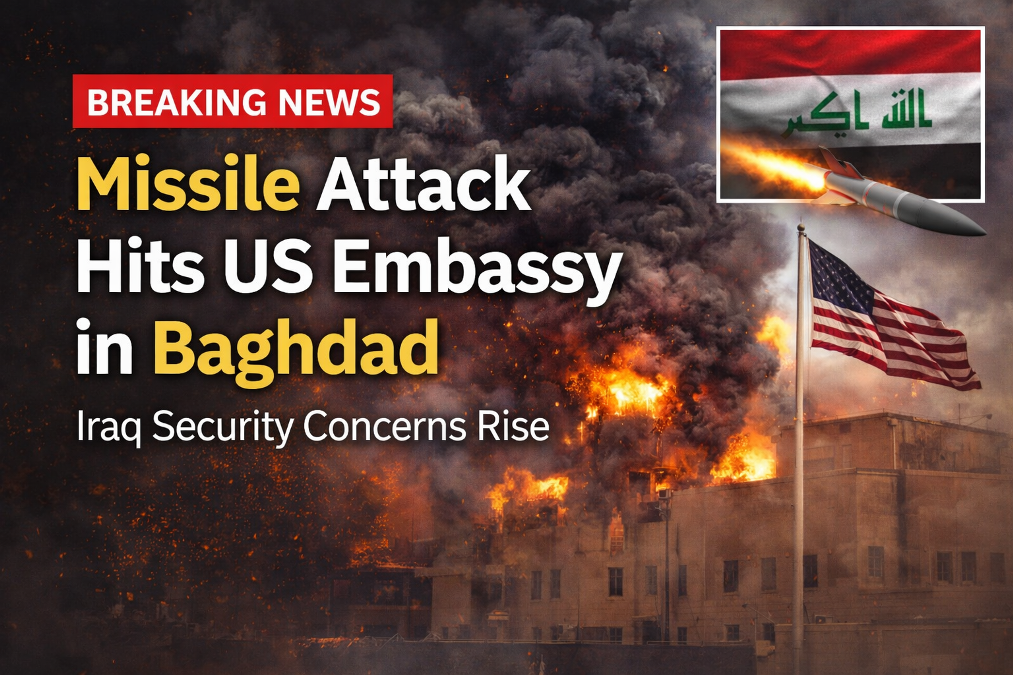
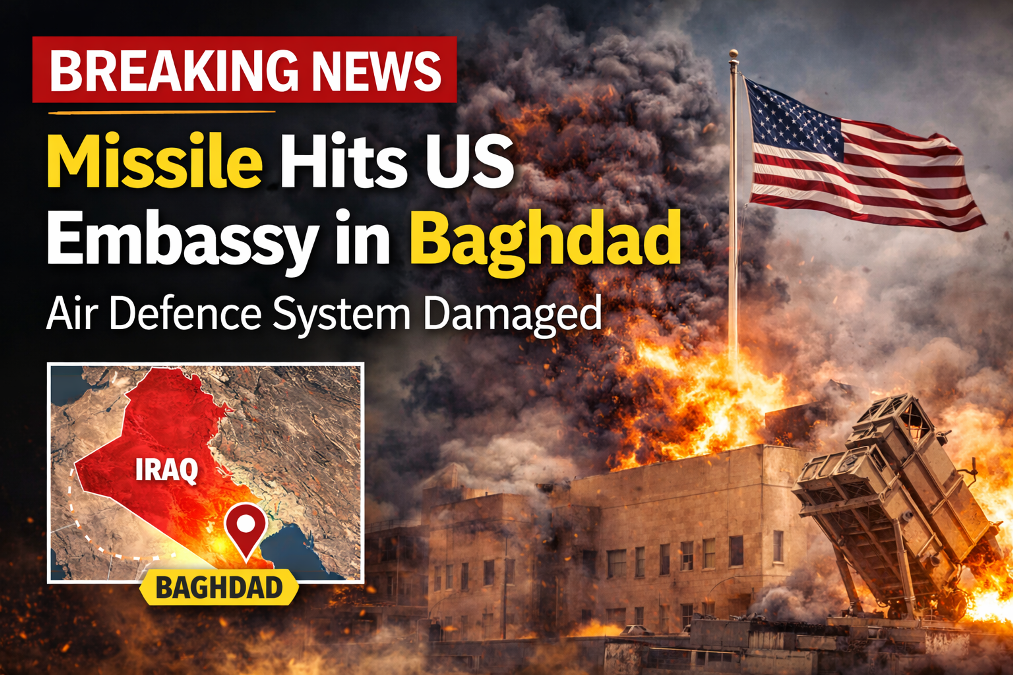
A missile strike targeting the United States Embassy in Baghdad has significantly heightened security concerns in Iraq as the ongoing conflict in the Middle East continues to spread across the region. According to reports, the missile struck the US diplomatic compound on Saturday morning, damaging part of the embassy’s air defence system and raising fears of further escalation.
The attack comes amid a growing number of strikes targeting American military bases, diplomatic facilities, and interests across Iraq. Security analysts warn that the country is increasingly becoming a battleground for rival forces as tensions between Iran-aligned groups and the United States intensify.
Missile Strike at US Embassy Compound
Sources familiar with the situation confirmed that the missile hit a section of the US Embassy compound in Baghdad’s heavily fortified Green Zone. The strike reportedly damaged part of the air defence system installed to protect the embassy from incoming rockets, missiles, and drones.
Although no casualties were immediately reported from the embassy compound, the incident has triggered alarm among diplomats and security officials. The US Embassy is one of the largest diplomatic missions in the world and serves as a critical hub for American operations in Iraq.
Security systems at the embassy are designed to intercept aerial threats, including the Counter-Rocket, Artillery, and Mortar (C-RAM) defence system, which has previously been used to neutralize incoming rockets and missiles.
Increasing Attacks on US Interests
The missile strike is part of a broader pattern of attacks against US interests in Iraq that have intensified in recent weeks.
Iran-aligned armed groups operating in Iraq have claimed responsibility for several previous attacks on American military installations. These groups, often referred to collectively as the Islamic Resistance in Iraq, have pledged to retaliate against the United States following recent military operations targeting Iran and its allies.
Reports suggest that these groups have launched rockets, drones, and missiles targeting US bases, airports, and diplomatic facilities throughout Iraq.
Security experts say the frequency of these attacks has increased significantly, indicating that armed factions may be coordinating their operations as part of a wider regional campaign.
US Embassy Issues Urgent Warning
Following the missile strike, the US Embassy in Baghdad issued an urgent security alert urging American citizens to leave Iraq immediately.
The advisory warned that the security situation in the country remains unpredictable and that US citizens could face serious risks due to the ongoing conflict.
Embassy officials also emphasized that attacks targeting American facilities and personnel have become more frequent and may continue in the coming days.
The warning highlights growing concerns that foreign nationals could become targets as tensions continue to escalate across Iraq.
Rewards Offered for Information on Americans
Adding to the alarming situation, reports have emerged that certain Iraqi armed factions are offering financial rewards for information leading to the capture or targeting of American personnel.
According to local sources, some groups have announced rewards of up to $100,000 for information about US military or intelligence personnel operating in Iraq.
These offers have further raised security concerns among diplomats and international organizations working in the country.
Security analysts say such tactics are intended to intimidate foreign forces and increase pressure on the United States to reduce its military presence in Iraq.
Attacks Spread Across Iraq
The recent escalation is not limited to Baghdad alone. Several US military bases and installations across Iraq have come under attack in recent days.
Reports indicate that facilities in northern Iraq, including those located in the Kurdish region, have also been targeted with rockets and drones.
Airports and military bases used by coalition forces have experienced repeated attacks, forcing security personnel to remain on high alert.
One particularly serious incident reportedly resulted in the death of a French soldier when a military base was struck during one of the attacks.
The incident underscores the risk faced not only by American forces but also by international coalition troops operating in the region.
Iraq Caught in the Middle of the Conflict
The Iraqi government now finds itself in a difficult position as the country becomes increasingly caught between powerful international actors.
While Iraq maintains diplomatic relations with the United States, it also has strong political and economic ties with Iran. This delicate balance has made it difficult for the Iraqi government to control armed groups operating within its territory.
Many of these militias were originally formed to fight extremist groups but have since developed strong political and military influence inside Iraq.
As tensions between Iran, Israel, and the United States continue to escalate, Iraq risks becoming a central battlefield for proxy conflicts.
Security Concerns Growing
Security experts warn that the continued attacks on US facilities could lead to further retaliation by American forces.
The United States has previously responded to attacks on its bases with airstrikes targeting militia groups believed to be responsible.
Such retaliatory strikes could trigger a cycle of escalation, increasing the likelihood of a wider conflict within Iraq and across the Middle East.
The growing instability also threatens Iraq’s fragile security environment, which has only recently begun to recover after years of conflict with extremist organizations.
International Concerns
The rising violence in Iraq has drawn concern from international leaders and organizations.
Diplomatic missions across Baghdad have increased security measures, and several countries are reviewing travel advisories for their citizens.
Global leaders are urging restraint and calling for diplomatic solutions to prevent the situation from spiraling into a broader regional war.
However, with multiple armed groups operating in Iraq and the ongoing conflict between Iran and the United States intensifying, the prospects for immediate de-escalation remain uncertain.
Conclusion
The missile strike on the US Embassy in Baghdad marks a dangerous escalation in an already volatile regional conflict. The attack, which damaged part of the embassy’s air defence system, reflects the increasing boldness of armed groups targeting American interests in Iraq.
With attacks spreading across the country and warnings issued for US citizens to leave, Iraq is once again facing the risk of becoming a central battleground in a wider geopolitical struggle.
As tensions continue to rise and retaliatory actions remain possible, the coming weeks will be critical in determining whether the region moves toward further escalation or finds a path toward stability and dialogue.