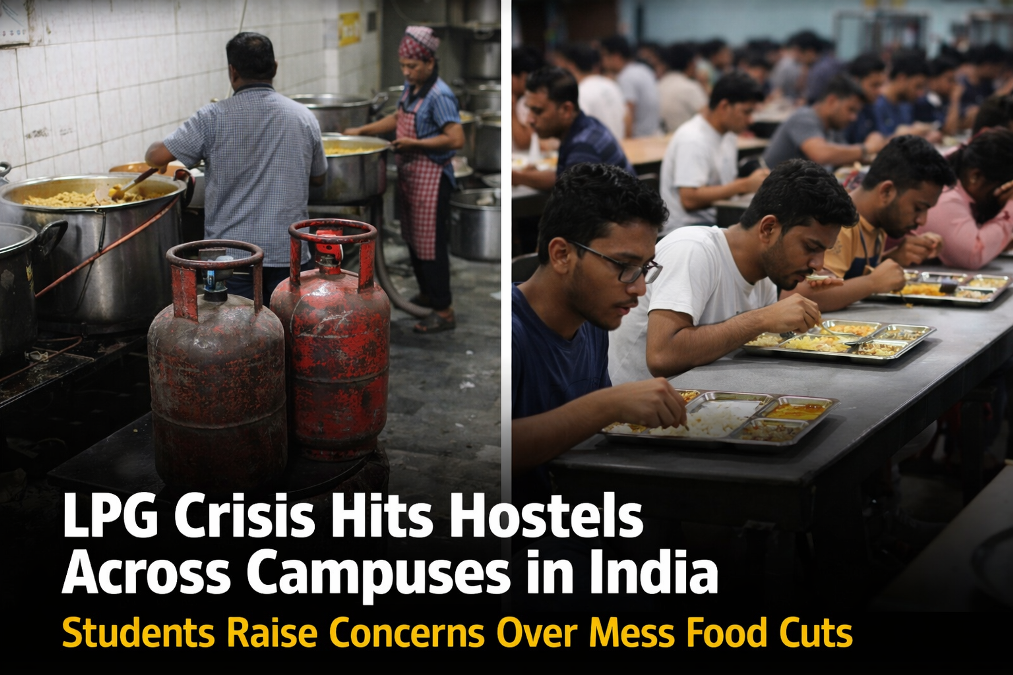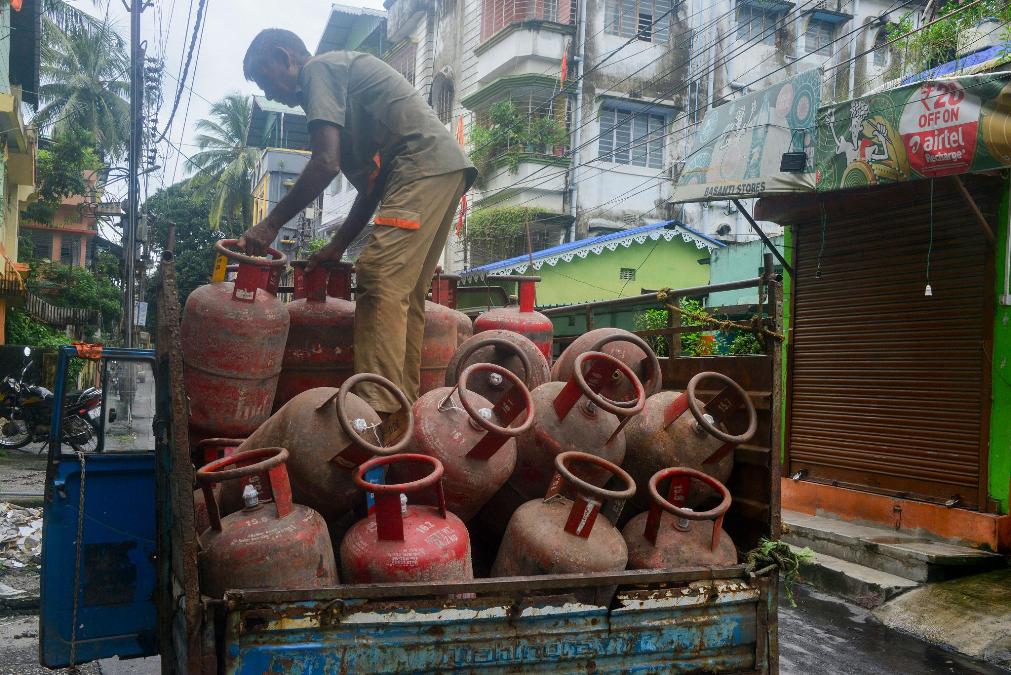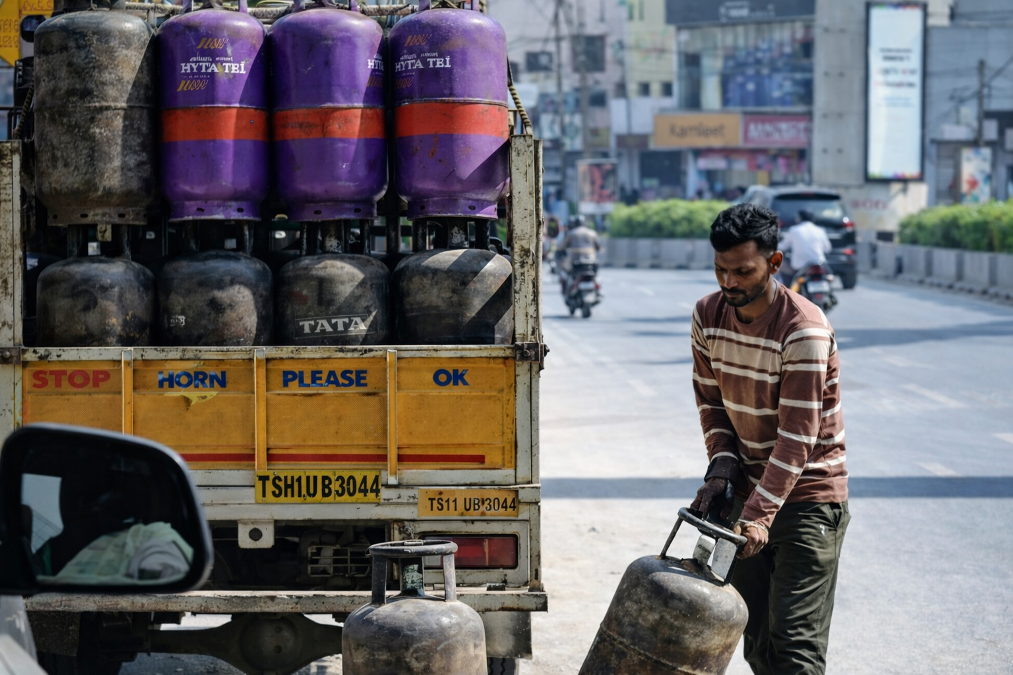
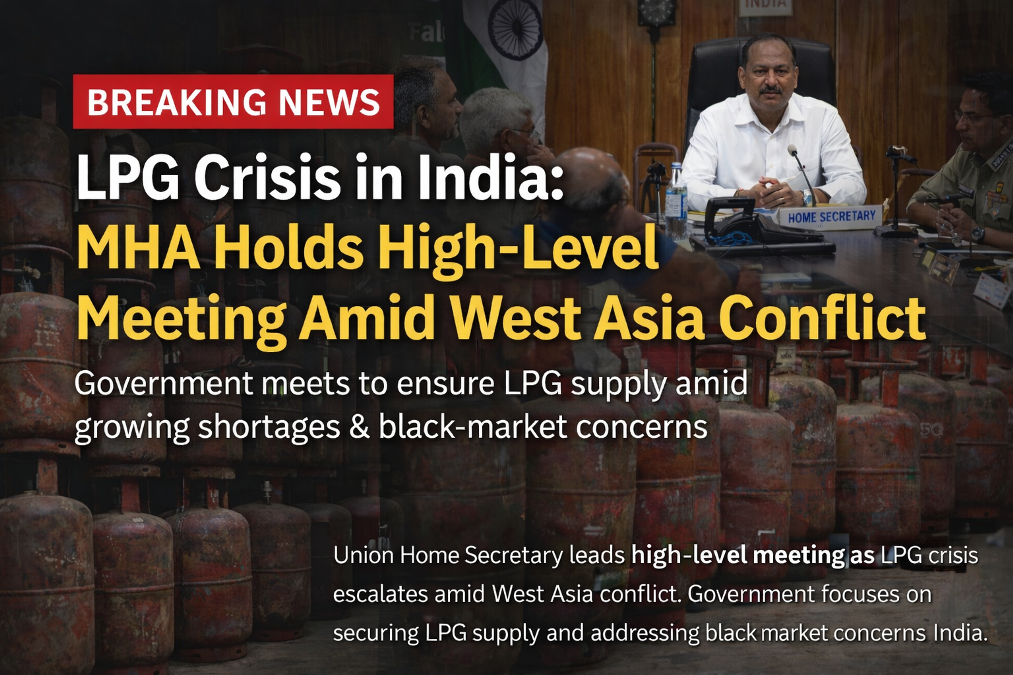
Concerns over a potential LPG supply shortage in India have intensified following the escalating conflict in West Asia. While the government has repeatedly assured citizens that there is no nationwide shortage of LPG cylinders, reports from several cities indicate growing difficulties in obtaining cylinders and rising cases of black-market sales.
Amid rising public anxiety, Union Home Secretary Govind Mohan convened a high-level meeting on Tuesday with Chief Secretaries and Directors General of Police (DGPs) from all states and Union territories. The purpose of the meeting was to review preparedness across the country and ensure that the LPG supply chain remains stable and secure during the ongoing geopolitical crisis.
The meeting lasted for nearly two hours and focused on assessing stock levels, distribution systems, and enforcement mechanisms to prevent disruptions in LPG supply for domestic consumers.
High-Level Review Meeting Held by MHA
The meeting was attended by senior officials from several key ministries, including the Ministry of Petroleum and Natural Gas, Ministry of Consumer Affairs, and the Ministry of Information and Broadcasting.
Officials discussed the current LPG inventory across the country, possible risks to the supply chain, and strategies to prevent hoarding and illegal sales. The review also examined the implementation of the LPG Control Order issued on March 8, which was designed to regulate the distribution of LPG cylinders and ensure that domestic consumers receive priority.
Government officials emphasized that the purpose of the meeting was not to address a shortage but to prevent panic and ensure uninterrupted LPG availability during uncertain global conditions.
Rising Public Concerns Over LPG Availability
Despite government assurances, reports from multiple cities suggest that many households and businesses are facing delays in LPG cylinder delivery. Restaurants, small eateries, and street food vendors have reported difficulty in securing commercial LPG cylinders.
Some consumers have also reported that cylinders are being sold at inflated prices in the black market due to limited supply and increased demand.
The situation has been particularly concerning in metropolitan cities where restaurants and small businesses depend heavily on LPG cylinders for daily operations.
Many restaurant owners have warned that if supply delays continue, they may be forced to reduce operating hours or increase food prices to compensate for higher fuel costs.
Impact of West Asia Conflict on Global Energy Markets
Energy analysts say the current situation is largely linked to the ongoing conflict in West Asia, which has disrupted global oil and gas supply chains.
The Middle East is a major hub for global energy production and shipping routes. Any escalation in the region can have a ripple effect on international fuel markets.
One of the most critical shipping routes affected by the conflict is the Strait of Hormuz, through which a significant portion of the world’s oil and LPG shipments pass.
Disruptions in this region could delay shipments, increase transportation costs, and create temporary supply challenges for importing countries like India.
Key Directives Issued by the Ministry of Home Affairs
During the high-level meeting, the Ministry of Home Affairs issued several directives to state governments and law enforcement agencies to ensure the integrity of LPG supply chains.
Infrastructure Security
States were instructed to strengthen security at LPG bottling plants, storage facilities, distribution centres, and transport fleets. Authorities were asked to ensure that workers involved in LPG distribution remain safe and that operations continue without interruption.
Security agencies were also advised to increase surveillance at critical infrastructure sites to prevent sabotage or disruptions.
Market Monitoring
Local administrations were directed to conduct daily inspections of LPG inventories and monitor distribution points closely.
Officials have been instructed to take strict action against individuals or businesses involved in hoarding, black-marketing, or illegal diversion of LPG cylinders.
The government emphasized that ensuring fair distribution is essential to prevent artificial shortages in the market.
Enforcement of LPG Control Order
Authorities were reminded to strictly enforce the LPG Control Order, which regulates the storage, distribution, and sale of LPG cylinders.
This order allows officials to take legal action against traders who attempt to manipulate supply or sell cylinders at unauthorized prices.
Crackdown on Black Marketing
The government has also intensified efforts to crack down on illegal LPG sales.
In recent weeks, enforcement agencies have conducted several search and seizure operations across the country to identify black-market activities.
Authorities say some traders have been diverting domestic LPG cylinders to commercial users, where they can be sold at higher prices.
Such practices not only create artificial shortages but also increase the financial burden on households.
Officials have warned that strict legal action will be taken against violators.
Domestic Consumers Remain the Top Priority
Government officials have emphasized that domestic households remain the highest priority when it comes to LPG distribution.
Oil marketing companies including Indian Oil Corporation (IOC), Bharat Petroleum (BPCL), and Hindustan Petroleum (HPCL) have been instructed to ensure that household LPG supplies remain stable.
Requests from commercial sectors are being carefully evaluated and allocated based on urgency and availability.
This approach aims to ensure that families across the country continue to have access to cooking gas despite temporary supply pressures.
Coordination Between States and Oil Companies
The government has also strengthened coordination between state administrations and oil marketing companies.
Officials say that better communication and real-time monitoring of LPG stocks will help prevent shortages and improve distribution efficiency.
State authorities have been asked to report daily updates on stock availability, demand levels, and distribution progress.
This system will allow the central government to respond quickly if any region begins to experience supply disruptions.
Government Urges Public Not to Panic
Authorities have urged citizens not to panic or engage in unnecessary stockpiling of LPG cylinders.
Officials say panic buying can disrupt the distribution network and worsen supply challenges.
Consumers have been advised to book cylinders through official channels and report any suspicious activities or price manipulation to local authorities.
The government has reiterated that India has adequate LPG reserves and that supply conditions are being monitored continuously.
Conclusion
The ongoing conflict in West Asia has created uncertainty in global energy markets, raising concerns about LPG availability in India. While reports of delivery delays and black-market sales have emerged from some cities, the government maintains that there is no nationwide shortage of LPG cylinders.
Through high-level meetings, strict enforcement of regulations, and improved monitoring of supply chains, authorities are working to ensure that LPG continues to reach households across the country without disruption.
As the geopolitical situation evolves, the government’s focus remains on protecting domestic consumers, preventing illegal activities, and maintaining stability in the LPG distribution system.